

Cargo insurance is often overlooked because many businesses assume that if their cargo travels with a reliable shipping line or carrier, it is already ‘safe’. Unfortunately, this is one of the most expensive myths in logistics.
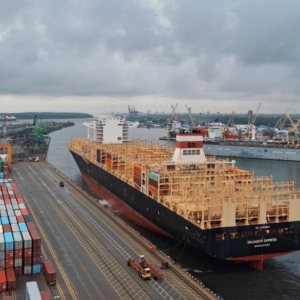
Sea freight is highly attractive because of its low cost and ability to transport large volumes efficiently. At the same time, it involves a long transport chain in which cargo can be affected by handling, moisture, accidents, fires, loss or other unexpected events.
Carrier liability alone is therefore not always sufficient – for valuable cargo, the need for additional cargo insurance should be assessed in advance.
General Average
In sea transport, it is also important to understand the principle of general average ( General Average).
If exceptional expenditure is incurred or property is deliberately sacrificed to save the vessel and cargo as a whole, cargo owners may also be required to contribute to those costs.
Carrier liability limits
Logistics and transport companies generally carry liability insurance, but carrier liability insurance is not the same as cargo insurance.
Carrier liability depends on the mode of transport, the applicable rules and contract terms, and whether the carrier can be held liable for the damage.
What does this mean in practice?
- Not every instance of cargo damage means the carrier is at fault.
- Compensation may be limited under the liability rules applicable to the mode of transport.
- The actual value of expensive but lightweight cargo may be far higher than the carrier’s potential liability limit.
- Exclusions may apply to damage caused by packaging, loading, securing or other circumstances.
Carrier liability and cargo insurance are not the same thing. If the value of the cargo is significant to your business, the risk should be assessed before the shipment leaves.Aušra Budginienė, Head of Sales at TLC
Additional cargo insurance
Additional cargo insurance allows the risk to be assessed according to the value of the cargo itself and the specific transport conditions, rather than only according to the carrier’s liability limits. TLC can help clients arrange cargo insurance under ICC A, B or C conditions, selecting an appropriate level of protection according to the cargo, route and mode of transport.
ICC (A, B, C) insurance
ICC clauses allow different levels of insurance cover to be selected. The appropriate option is chosen individually according to the cargo and its transport risks.
- Scope of cover. Selected according to the nature of the cargo, route, mode of transport and risks of the specific project.
- Cargo value. The insured amount is linked to the insured value of the cargo, not merely to its weight.
- Partial damage or loss. Cover may also apply to partial cargo damage or loss, depending on the insurance conditions selected.
- Documentation. A logistics partner can help provide the insurer with the required information and transport documents.
ICC A, B and C are not identical packages. Their scope of cover differs, so the insurance option should be selected according to the actual risks of your cargo. The official Institute Cargo Clauses wording is published by International Underwriting Association (IUA).
Why arrange cargo insurance together with logistics?
A logistics company already has the key information about the cargo – its value, nature, mode of transport, route and documentation. Cargo insurance can therefore be integrated into the overall transport process.
For the customer this means:
- fewer separate processes and contacts;
- faster submission of the required information to the insurer;
- an insurance solution tailored to the specific transport route;
- simpler document management if an insured event occurs.
If loss of the cargo would harm your business, insurance should be treated as part of the overall logistics chain rather than remembered only after the cargo has already departed.Aušra Budginienė, Head of Sales at TLC
It is a mistake to assume that such incidents happen only to ‘someone else’. A simple rule is to protect what creates value for your business.