
A customs broker’s work involves far more than completing customs declarations. It is a responsible role combining knowledge of customs procedures, document control, communication with authorities and the ability to explain complex requirements clearly to customers.
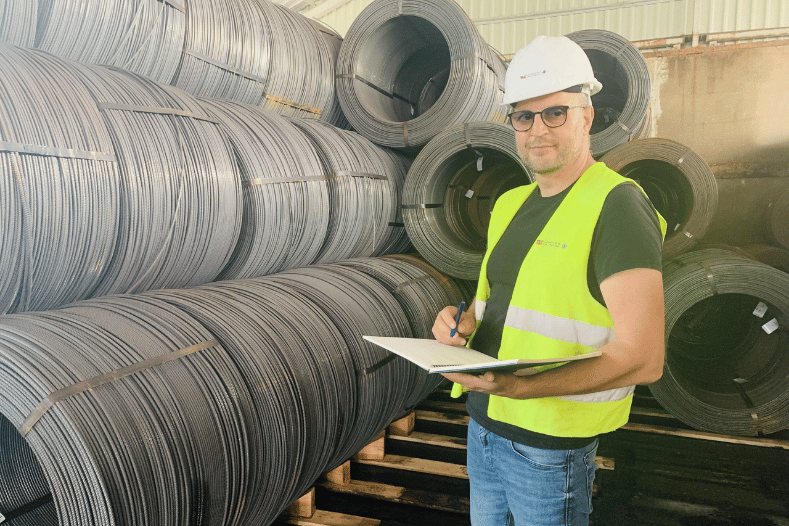
We discuss the everyday reality of the profession with Arvydas Vaičius, a customs broker at UAB Tarptautinės logistikos centras (TLC) who has worked in the field for more than seven years.
What does a customs broker do?
It is often assumed that a customs broker’s work is limited to filling in declarations. In practice, the responsibilities are much broader – the broker helps customers prepare correctly for customs procedures and ensures that the required documents are prepared accurately and on time.
Arvydas manages customer cargo documentation for import, export and transit procedures, completes and checks transport documents, prepares electronic TIR data, advises on customs formalities and communicates with customs authorities, carriers, terminals and other logistics-chain participants.
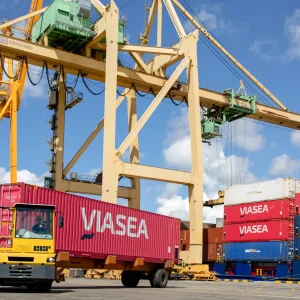
Where necessary, the customs broker also attends cargo inspections at terminals and checks whether the actual cargo details match the documentation submitted.
When is a customs broker needed?
Customs-broker support is relevant when goods are imported into the European Union, exported from it or moved under transit and other customs procedures. In such cases, information on product classification, duties, taxes, documents and procedure-specific requirements must be managed correctly.
Lithuanian Customs states that declarations are submitted when goods are placed under selected customs procedures, re-exported, temporarily stored or when other mandatory information is provided to customs. More information about import and export declarations is available in the information provided by Lithuanian Customs.
For manufacturing, trading or other businesses, entrusting customs formalities to a specialist allows more attention to be focused on core activities, while specific procedural and documentation matters are handled by someone who works with them every day.
What qualities does a customs broker need?
According to Arvydas, this profession suits people who enjoy dynamic work and can maintain concentration even when dealing with large amounts of information. The most important qualities are attention to detail, thoroughness, responsibility and good communication skills.
Customs procedures often involve deadlines, documents from different countries and the actions of several participants in the process, so a customs broker must not only perform tasks accurately but also respond quickly to changing circumstances.
Why are attention to detail and thoroughness so important?
Every detail matters in customs documents. Data cannot be assessed mechanically alone – it must be checked against applicable legislation, the specific customs procedure and the circumstances of the cargo.
If anything is unclear, the customs broker must verify the information further, analyse legislation and, where necessary, contact customs authorities for clarification. Even a small discrepancy in the documents can affect the course of a procedure, which is why thoroughness is one of the most important professional qualities in this work.
Documents are only part of the job
Correct and timely documentation is essential, but a customs broker’s work does not end there. It is equally important to keep the client informed in good time about the progress of the procedure, changing requirements, possible charges and any issues that arise.
Proactive communication helps the client understand what is happening with the cargo and what further actions may be required. This is especially important when a customs procedure takes longer than expected or additional questions arise about the documents or cargo.
Customs rules and procedures are constantly changing
Keeping professional knowledge up to date is a continuous part of a customs broker’s work. Legislation, electronic systems, procedural requirements and document submission rules change, so it is important to follow the latest information and know how to apply it to each specific situation.
“First, I gather the information in a way that is easy to understand, and only then do I clearly explain to the client how best to prepare the cargo documents or complete the required procedures.”Arvydas Vaičius, TLC Customs Broker
A customs broker's work means greater clarity for the client
For the client, a customs broker is the specialist who turns complex formalities into a clearly manageable process. Experience, accuracy, knowledge of current requirements and continuous communication help reduce the risk of errors and make import, export and transit procedures more efficient.
This is why the work of a customs broker is an important part of the international logistics chain – from preparing documents to practical communication with authorities and keeping the client informed at every stage of the process.