
What is a freight forwarder and why is this role important in almost every goods supply chain? Although logistics may seem distant from everyday consumers, practically every product or raw material that reaches us had to be transported at some point.
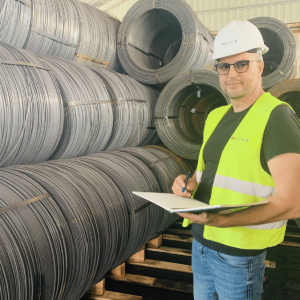
We talk about the work of a freight forwarder, freight forwarding and everyday challenges with Algirdas Pauliukevičius, a freight forwarder at UAB Tarptautinės logistikos centras (TLC).
What is a freight forwarder?
A freight forwarder is a specialist who organises a customer’s cargo transport and coordinates processes related to import and export. They help select the right route and mode of transport and advise on documentation, customs procedures, insurance, deadlines and transport costs.
As Algirdas explains, the value of a freight forwarder becomes clear when the customer does not need to coordinate numerous logistics-chain participants and procedures separately – most of the process is managed in one place.
What does freight forwarding mean?
Freight forwarding is not about organising an ‘expedition’ to a distant corner of the world. In logistics, it is the process of planning cargo transport and coordinating all related activities.
A freight forwarder will typically:
- plan the cargo route and select a suitable carrier;
- coordinate preparation of customs, insurance and other required documents;
- track cargo movement and keep the customer informed about transport progress;
- arrange additional services required for the cargo to reach the consignee safely and on time.
More information about the international freight forwarding profession and its scope is available from FIATA – the International Federation of Freight Forwarders Associations .
How does a freight forwarder make the customer's work easier?
When using a freight forwarder, the customer generally does not need to coordinate every stage of transport independently with separate service providers. The forwarder can coordinate selection of a commercially sensible route, transport equipment suited to the cargo, transport and insurance documents, customs procedures, warehousing, cargo tracking and communication with the shipper and consignee.
The customer should be offered not just transport from point A to point B, but an individual service portfolio that also anticipates actions the customer may not even have considered.Algirdas Pauliukevičius, TLC Freight Forwarder
What qualities does a freight forwarder need?
Algirdas has worked as a freight forwarder since 2017. In his view, competence, responsibility and good communication are especially important in this profession. Unexpected situations arise constantly in logistics, so a forwarder must be able to respond quickly, look for alternatives and keep working until the problem is solved.
Continuous professional development is equally important. Transport-market conditions, document requirements, routes and customer needs change, so the ability to learn and adapt directly contributes to service quality.
An international partner network – an important part of freight forwarding
In international freight forwarding, a company’s capabilities often also depend on a reliable partner network. Over many years, the TLC team has built relationships with logistics partners in different countries and belongs to the international PANGEA logistics network.
This enables us to coordinate different transport stages and work with local partners in foreign markets when a route involves several countries or modes of transport.
What does a freight forwarder's working day look like?
A large part of a freight forwarder’s day is spent at the computer: communicating with customers and partners, monitoring cargo movements, resolving issues and preparing documentation.
The volume of paperwork depends on the cargo. Documentation for one large shipment may be relatively straightforward, whereas moving many partial loads that differ in size, weight or destination creates significantly more paperwork and coordination tasks. Accuracy and attention to detail are therefore essential.
The biggest challenge – cargo spread across several continents
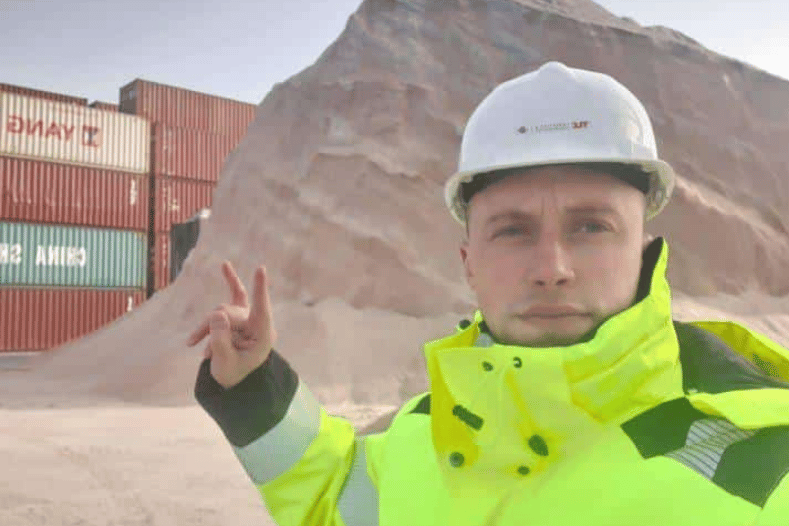
One of Algirdas’s most memorable projects involved coordinating delivery of cargo geographically dispersed across several continents to numerous locations throughout Lithuania.
The project required managing a large flow of information, coordinating different transport stages, maintaining continuous communication with partners and ensuring that every part of the shipment reached the correct destination at the right time. Projects like this demonstrate that freight forwarding is not simply booking transport but planning and controlling the entire process.
What is a freight forwarder from the customer's perspective?
For the customer, a freight forwarder is first and foremost the person who helps manage a complex logistics process and reduces the need to coordinate many separate links in the chain. Experience, a partner network, the ability to anticipate potential disruptions and rapid problem-solving make it possible to provide not only transport but an individual logistics solution tailored to the specific cargo and business needs.