

Project overview
The development of energy-storage projects in Lithuania requires not only technological solutions but also precisely planned international logistics.
A single project may require battery modules from China, inverters from Italy and transformers from Türkiye. All of these components must reach Lithuania on time and in the correct sequence so that project developers can keep to their planned installation schedule.
The TLC team coordinates different modes of transport, dangerous and heavy cargo, warehousing and final delivery as one integrated logistics chain.
Challenge
The main challenge is synchronising the delivery of energy-storage-system components manufactured in different countries.
Batteries, inverters and transformers arrive via different routes and modes of transport, so a delay to any one component can affect the entire project schedule.
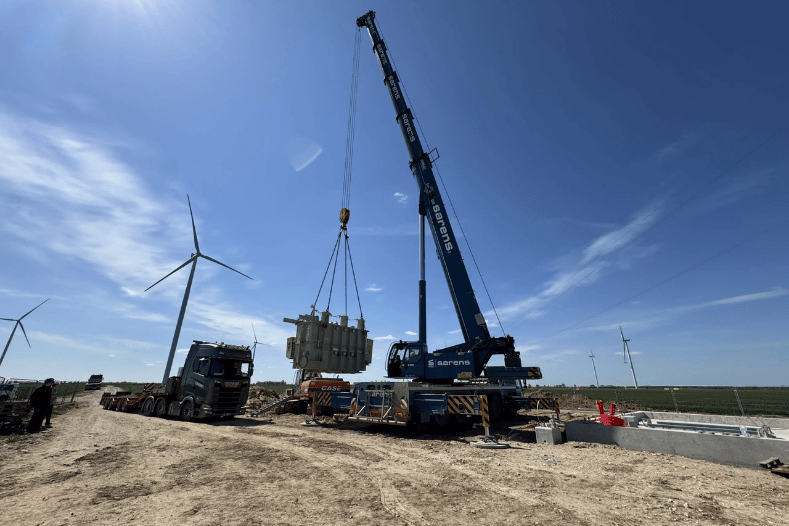
Additional complexity comes from the fact that batteries are classified as dangerous goods, while some energy-storage equipment is extremely heavy and cannot be transported in a standard container.
Constraints
Some energy-storage batteries can weigh up to 45 tonnes. In such cases, specialised transport equipment, a suitable platform and a pre-planned route are required.
Dangerous-goods classification also reduces the number of available carriers. Not every oversized-cargo carrier is authorised or equipped to handle dangerous goods, which makes partner selection one of the most important parts of the project.
TLC uses its long-standing international logistics experience and partner network to select an appropriate transport solution for every stage of the project.
Our solution
Different transport models are used for different energy-storage-system components.
Batteries from China are organised by sea freight, inverters from Italy may travel by rail to Germany and then by ferry, while transformers from Türkiye can be transported by sea or road.
In the final stage, the components reach Lithuania and are delivered to various project locations, including Kelmė, Mažeikiai, Anykščiai, Kruonis and Panevėžys.
When cargo arrives before installation work begins, TLC coordinates warehousing, loading, order preparation and preparation for onward delivery according to the project schedule.
Result
A coordinated transport and warehousing model allows energy-storage components manufactured in different countries to be brought together within one logistics chain and delivered to project sites in Lithuania according to plan.
The project developer therefore does not need to manage each transport stage separately – the TLC team coordinates international transport, selection of specialised carriers, dangerous- and heavy-cargo processes, warehousing and final delivery.
Key project aspects
Energy-storage projects require different components – batteries, inverters and transformers – manufactured in different countries, so their delivery must be precisely coordinated against the overall project schedule.
Batteries are classified as dangerous goods, so their transport requires particular attention to safety, an appropriate transport solution and coordination of the required procedures.
Some energy-storage batteries can weigh up to 45 tonnes, so a standard container solution is not always suitable and specialised platforms and an individually planned route may be required.
Different components use different modes of transport: sea, rail, road and ferry services, followed by final delivery to project locations in Lithuania.
When components arrive before installation begins, reliable warehousing infrastructure, order preparation and readiness for delivery according to the project schedule become important.
Logistics for energy-storage components
Energy-storage project logistics involves far more than simply transporting cargo. It requires coordination between different manufacturers, countries, transport modes and project stages, while taking into account the requirements for dangerous and heavy cargo.
TLC organises the transport, warehousing and final delivery of batteries, inverters, transformers and other energy-project components, helping project developers keep to their planned work schedules.