

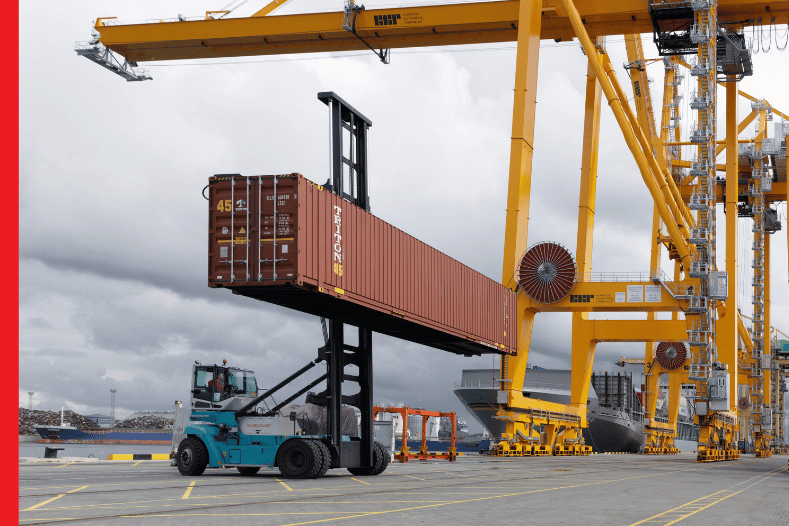
The cost of shipping a container does not always depend on which destination port is closer. It is shaped by the entire route structure, including cargo volumes, sailing frequency, vessel rotations, transshipments, container availability and terminal charges.
At the time of writing, we compared quotations for the same container type and found that the ocean freight rate from Shanghai to Klaipėda was approximately 16% higher than the rate from Shanghai to Rotterdam. Why can this happen?
Distance is only one part of the freight rate
When considering the entire journey from China to Europe, the difference in distance between Rotterdam and Klaipėda is not the main factor determining the price. Cargo volumes and the way a shipping line structures its service can have a much greater impact.
Large cargo flows allow carriers to use vessel capacity more efficiently and distribute route costs across a greater number of containers. Routes with lower volumes may have fewer sailings and a higher share of operating costs allocated to each container.
Rotterdam benefits from scale
Rotterdam is Europe’s largest port and one of the world’s leading container shipping hubs. It has deep-sea connections with more than 1,000 international ports and can accommodate the largest container vessels.
High cargo volumes and an extensive service network provide more routing options and opportunities for direct sailings. Due to these economies of scale, the base freight rate to Rotterdam may be lower during certain periods.
Transshipment adds time and cost
Klaipėda is an important Baltic port, but the frequency of services from Asia may be lower for a particular shipping line. Depending on the carrier, a container bound for Klaipėda may follow a longer vessel rotation or be transshipped at another European port.
During transshipment, the container is unloaded from a deep-sea vessel, temporarily stored at the terminal and loaded onto another ship. This may result in:
- additional terminal handling and charges;
- a longer transit time;
- dependence on the connecting vessel’s schedule;
- a greater risk of delays;
- additional cargo administration costs.
A relatively short additional leg can therefore have a noticeable effect on the freight rate.
The entire route structure matters
“In this case, the price difference is not determined by sailing distance alone. Rotterdam handles large container volumes and has more direct deep-sea services, allowing route costs to be distributed across a greater volume of cargo. Depending on the shipping line, a container bound for Klaipėda may need to be transported via an intermediate port, and the additional transshipment increases the overall freight cost,” says our director Žilvinas Urbonas.
What should be compared when choosing a destination port?
A lower ocean freight rate does not necessarily mean a lower total delivery cost. When comparing routes, consider:
- the base freight rate and additional surcharges;
- the total transit time;
- the number of transshipments and the risk of delays;
- terminal handling and documentation charges;
- the cost of inland transportation;
- container free time and storage conditions.
The best route is not always the one with the lowest ocean freight rate. The decision should be based on the entire journey from the point of origin to the final destination.